Oxidation is one of the main causes of spoilage in food, dietary supplements, and technical products. Traditional methods, such as vacuum packaging or modified atmosphere packaging (MAP), often leave 0.5 to 2% residual oxygen in the packaging. For sensitive products, this can be a critical amount. Oxygen absorbers (or scavengers) can reduce the residual oxygen level to below 0.01% (100 ppm).
This guide summarizes how oxygen absorbers work, how to select them properly, how to calculate the required capacity, and the principles for implementing them into packaging processes.
---
1. How Oxygen Absorbers Work
An oxygen absorber is a small, breathable pouch containing a mixture of iron powder, activated carbon, and salts (which act as a catalyst).
Reaction principle: The iron powder reacts with oxygen inside the sealed package to form iron(II) oxide (chemical oxidation/rusting).
Selectivity: The pouch absorbs only oxygen, not nitrogen or other gases. The volume of air in the package decreases by approximately 20% after oxygen absorption.
Final state: The oxygen concentration in the sealed package drops below 0.01%, which halts all aerobic processes.
2. Key Benefits for Manufacturers and Distributors
- Inhibition of microorganism growth: Molds and aerobic bacteria require oxygen to survive. Their growth stops at concentrations below 0.5%.
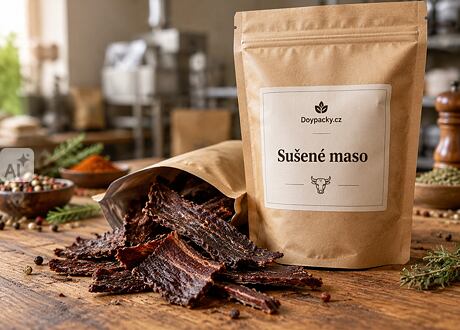
- Prevention of fat and oil oxidation: Prevents rancidity in nuts, dried meat, baked goods, and animal feed.
- Preservation of sensory properties: It protects the original color, aroma, and nutritional values (e.g., vitamins C and E).
- Protection against insects and pests: In an oxygen-free environment, neither adults, larvae, nor eggs can survive (e.g., in flour, grains, and legumes).
3. Typical Applications in the B2B Segment
| Segment | Typical Products | Main problem addressed |
|---|---|---|
| Non-perishable foods | Dried meat (jerky), nuts, dried fruits, spices, coffee | Rancidity of fats, loss of aroma, fading of colors |
| Bakeries and pastry shops | Gluten-free baked goods, packaged cakes, tortillas | Mold growth without the need for chemical preservatives |
| Dietary supplements and pharmaceuticals | Herbal extracts, vitamins, capsules, diagnostic strips | Degradation of active ingredients by oxidation |
| Pet food | Dog and cat treats, dried meat treats | Fat oxidation, shortened shelf life |
| Industry and Technology | Metal components, optics, museum artifacts | Metal corrosion, material degradation |
4. Calculating the Required Absorber Capacity
Absorber capacity is specified in cubic centimeters (cc) of absorbed pure oxygen (e.g., 50 cc, 100 cc, 300 cc, 500 cc).
Air contains approximately 21% oxygen. To make the correct selection, it is necessary to calculate the volume of free air in the package (headspace + air between product particles).
Calculation formula:
Volume of free air (in ml) = Total package volume (ml) - (Product weight in grams / Product density in g per ml)
Required O2 capacity (in cc) = Free air volume (ml) × 0.21
>Practical recommendation: Always add a safety margin of 20–30% to the resulting value (to compensate for changes in package permeability over time and handling during packaging).
5. Key Technical Requirements for Packaging
An oxygen absorber works only when combined with properly selected packaging. Standard polyethylene (PE) or polypropylene (PP) films have high oxygen permeability (OTR – *Oxygen Transmission Rate*), which leads to rapid depletion of the absorber’s capacity.
* Recommended materials: Barrier-laminated films (e.g., PET/AL/PE, PET/EVOH/PE, metallized PET, glass, metal cans).
* OTR value: Ideally, it should be less than 15 cm³/m²/24 h/atm (less than 2 cm³ for long-term storage).
* Seal quality: Seals must be 100% airtight. Microscopic leaks compromise the effectiveness of the absorber.
6. Handling Rules in the Manufacturing Process
When introducing absorbers into the packaging line, a standardized procedure must be followed:
- Exposure Time (Open Time): Absorbers begin to react immediately after the original vacuum packaging is opened. The package should be processed and resealed within 15 to 30 minutes.
- Handling Surplus Absorbers: Any remaining absorbers must be immediately sealed airtight in a barrier bag (preferably vacuum-sealed).
- Oxygen Indicator: Most professional packages contain an indicator tablet (pink = no oxygen / good; blue to purple = oxygen present / spoiled).
- Slight Negative Pressure: A 20% reduction in volume will cause the packaging to shrink slightly. For fragile products (e.g., potato chips), this phenomenon must be taken into account; if necessary, combine with an inert gas.
Summary
The use of oxygen absorbers is a cost-effective way to replace expensive technologies or chemical preservatives, extend the shelf life of products, and eliminate customer complaints caused by spoiled goods. The key to success is correctly calculating the capacity in cc and selecting the appropriate barrier packaging.